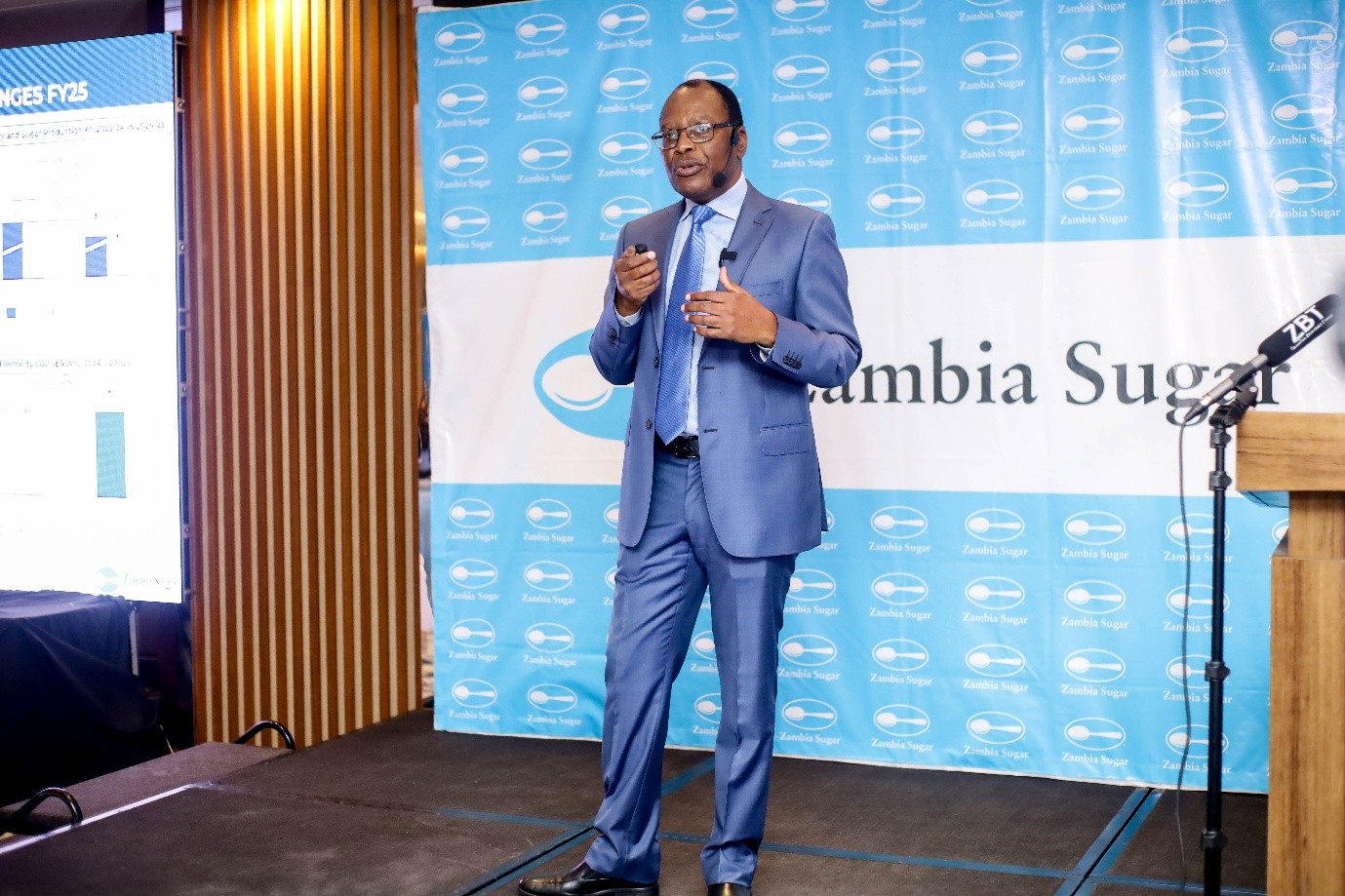
Gerald Hamuyayi, Lusaka, Thursday, 27 November 2025 - Zambia Sugar weathered one of its most challenging operating environments in recent years, marked by multiple headwinds. Despite facing a punishing combination of drought, power shortages and heightened cost pressures, the company still delivered strong financial results and exceptional shareholder returns. Its 2025 performance paints a picture of an agribusiness navigating what Managing Director Oswald Magwenzi describes as a “perfect storm” with remarkable resilience throughout the year.
As the drought took effect, the amount of sugarcane delivered to the factory over the two growing seasons declined to 3.191 million tonnes from 3.544 million tonnes recorded in 2024. With the residual effects of drought impacting yield per hectare for growers, the Nakambala Sugar Estate anchored supply through strong agronomic performance and operational efficiencies. Inevitably, the reduced cane supply cascaded through the value chain. Sugar production fell to 372,328 tonnes from 424,531 tonnes last year, a significant drop. Refined sugar, however, remained almost unchanged at 88,935 tonnes compared to 89,310 tonnes last year. In total, Zambia Sugar sold 391,674 tonnes compared to 400,631 tonnes in 2024, indicating a slight reduction in sales volumes.
The climate-induced drought also depressed water levels at Kariba Dam, Zambia’s main hydroelectric source. The resulting power deficit has left households experiencing up to three hours of daily load-shedding, and the industrial sector including Zambia Sugar has faced steep cost pressures. With local energy output constrained, the company turned to premium emergency power imports under a Power Supply Agreement with ZESCO. The tariff for imported power surged by 67%, rising from 9 cents to 15 cents per kWh. In response, Zambia Sugar has embarked on an 80MW co-generation power project to strengthen future energy security. The drought’s effects extended further, causing a loss of 11,214 tonnes of sugar and a 5% drop in yields from out-growers and Nanga Farms.
Building Resilience
Zambia Sugar has two notable strategic pathways for strengthening resilience in the face of operational headwinds. The first is customer centricity, supported by the K1.7 billion Twazabuka Project, which aims to enhance customer experiences and access across markets. The second is operational excellence, achieved through irrigation system upgrades worth K509 million, the installation of modern alternators valued at K340 million, and enhanced processing efficiency delivered through a falling film evaporator investment of K400 million.
Financial Performance
Despite reduced production, Zambia Sugar delivered record-breaking top-line growth. Revenue rose by 18% to K8.9 billion from K7.5 billion in 2024. The domestic market continued to anchor this expansion, generating K7.3 billion in 2025, a 20% increase equivalent to K1.2 billion more than last year. Export earnings, driven mainly by the DRC which accounts for 98% of export sales, grew by 9% from K1.4 billion to K1.6 billion. These trends highlight the company’s capacity to optimise its distribution networks while leveraging pricing power in both local and regional markets.
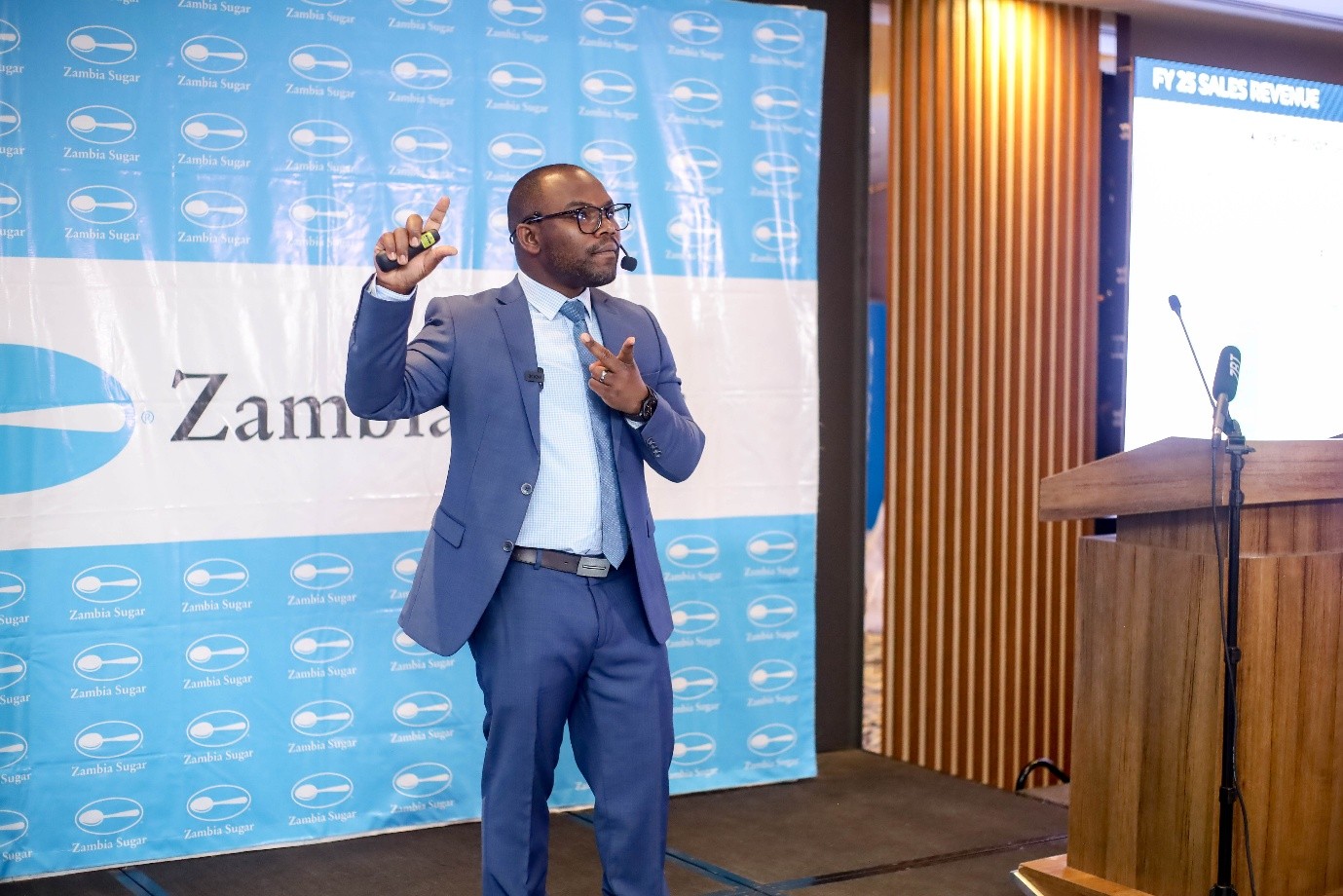
However, Zambia Sugar did not escape cost pressures. The cost of sales rose sharply by K1.72 billion, increasing from K3.59 billion to K5.31 billion. As a result, gross profit declined to K3.59 billion from K3.94 billion, with gross margins falling from 52.3% in 2024 to 40.4% in 2025. Operating expenses increased by 16.9% to K1.60 billion from K1.37 billion, driven mainly by a 32.5% rise in administrative expenses to K1.12 billion compared to K846 million in 2024. These pressures contributed to a reduction in operating profit, which fell to K1.99 billion from K2.57 billion.
Finance costs more than doubled from K55.8 million to K120.8 million in 2025. Withholding tax obligations accounted for K95 million, nearly 79% of total finance costs. Interest expenses on overdrafts and short-term facilities declined from K25.8 million to K7.4 million, indicating improved treasury management, while interest income dropped sharply from K17.1 million to K4.2 million. Consequently, net finance costs rose by K77.9 million, from K38.7 million to K116.6 million. Profit after tax stood at K1.63 billion, lower than the K2.06 billion recorded in 2024. Despite this reduction, Zambia Sugar maintained a relatively strong interest cover of 17 times, though significantly below last year’s 66.3 times.
Building A Fortress Balance Sheet
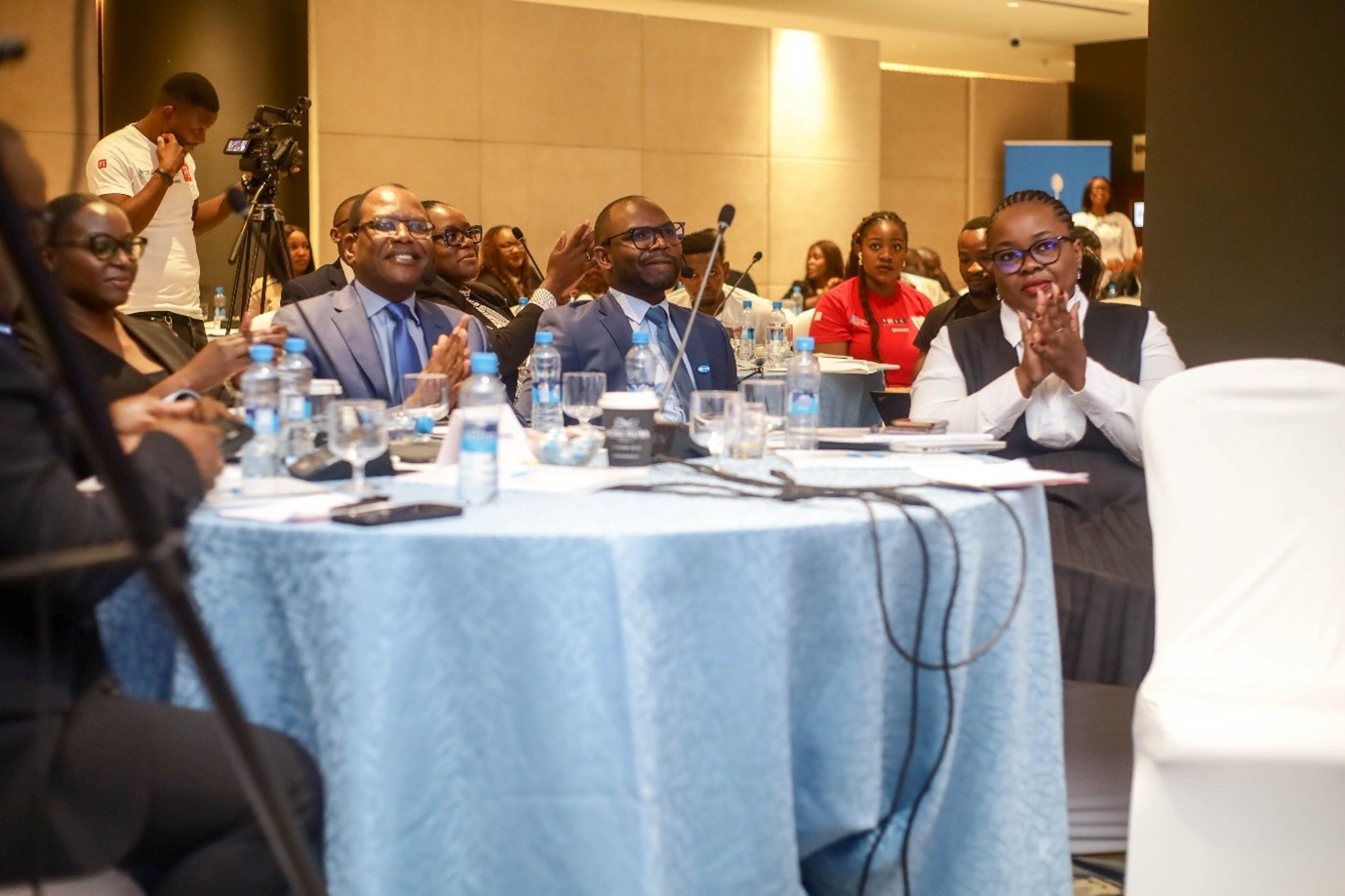
On the balance sheet, Zambia Sugar expanded its asset base from K7.04 billion to K8.79 billion. The business remains efficient in deploying assets, with an asset turnover ratio of approximately 1.01 times, meaning each kwacha in assets generates around one kwacha in revenue. This is a positive indicator for a capital-intensive agribusiness with large processing operations.
Liquidity improved modestly. The quick ratio increased from 1.33 times to 1.44 times, demonstrating stronger short-term coverage excluding inventories. The acid-test ratio also rose from 0.75 times to 0.81 times. Although still below 1, which is typical for an agri-processing business, the upward trend signals improved liquidity management.
Total liabilities grew from K2.13 billion to K2.76 billion, driven mainly by a new K700 million concessional loan facility obtained on 29 August 2025. The three-year loan, priced at the Bank of Zambia policy rate minus 0.5%, is notably affordable in the current high-interest environment. It is likely part of the Bank of Zambia’s K5 billion Stability and Resilience Facility, designed to support businesses affected by the 2023 and 2024 drought. Trade and other payables also increased and contributed positively to cash flow.
Cash Flow Position
Cash flow performance strengthened significantly. Zambia Sugar generated K2.27 billion in cash from its core operations, up from K1.85 billion in 2024, with working capital movements adding K404 million. Financing activities delivered positive net inflows of K127.43 million, largely due to the K700 million facility from Absa Zambia, though dividend payments amounting to K509.68 million and lease liability repayments of K62.89 million weighed on overall cash flows. The company’s investment in property, plant and equipment rose to K1.26 billion from K771.37 million, reflecting a strong commitment to long-term resilience and capacity-building. Overall, net cash and cash equivalents at end of period doubled to K1.02 billion.
Shareholder Return
At the AGM held today, Zambia Sugar shareholders approved a dividend of K1.096 per share, translating to a dividend yield of approximately 2.28%. Taking a broader view, the company’s share price strengthened significantly, rising 41% from K34 per share at the start of its financial year (1-Sep-2024) to K48 per share as of 31 August 2025. Beginning the 2025 calendar year at K36.10, the stock reached K65.27 per share by close of trading on 27 November 2025, representing an 80.8% year-to-date surge. This performance outpaced the Lusaka All Share Index return of 68% and positioned Zambia Sugar among the top performers on the Lusaka Securities Exchange. By comparison, the longest-dated government bond, the 15-year sovereign, offers a gross return of about 19.99%, translating to a net yield of roughly 15% after withholding taxes and Bank of Zambia handling fees. Within this context, Zambia Sugar remains a compelling investment for long-term value creation.
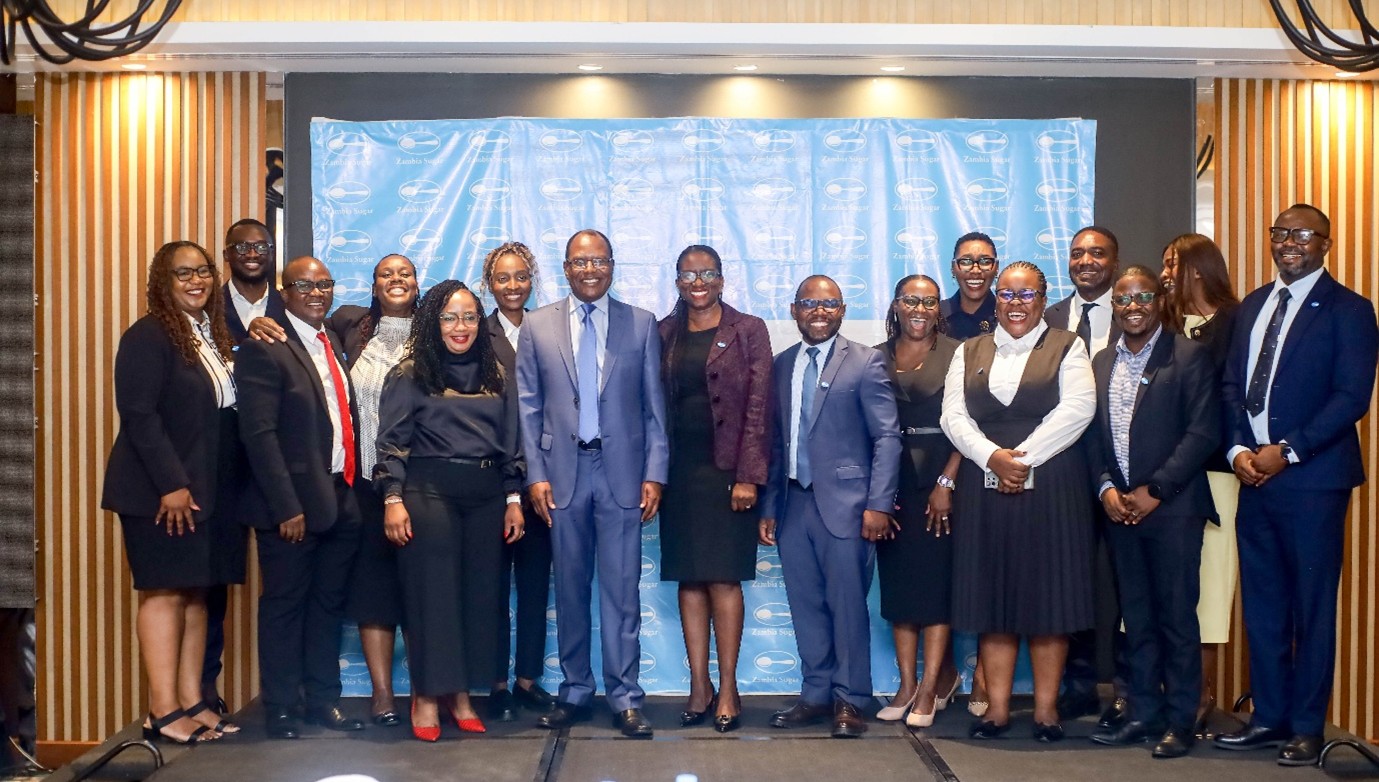
Zambia Sugar’s performance in 2025 demonstrates a resilient and adaptive business capable of navigating severe environmental and economic disruptions. The company has continued to make investments in operational efficiency, energy security and customer-focused projects, hence positions the sweet company to remain competitive and ready to face macro headwinds. With improved liquidity, a strong market power and a commitment to strengthening its asset base, Zambia Sugar stands out as one of the most reliable and value-creating companies on the Zambian Capital markets.