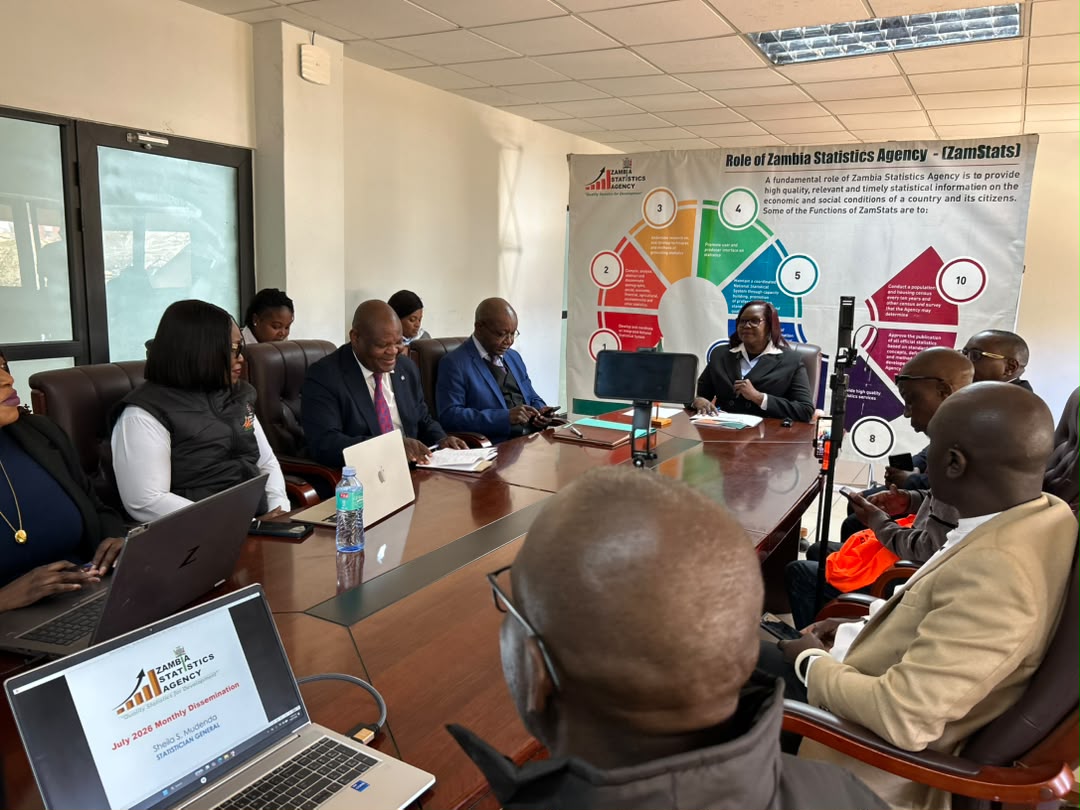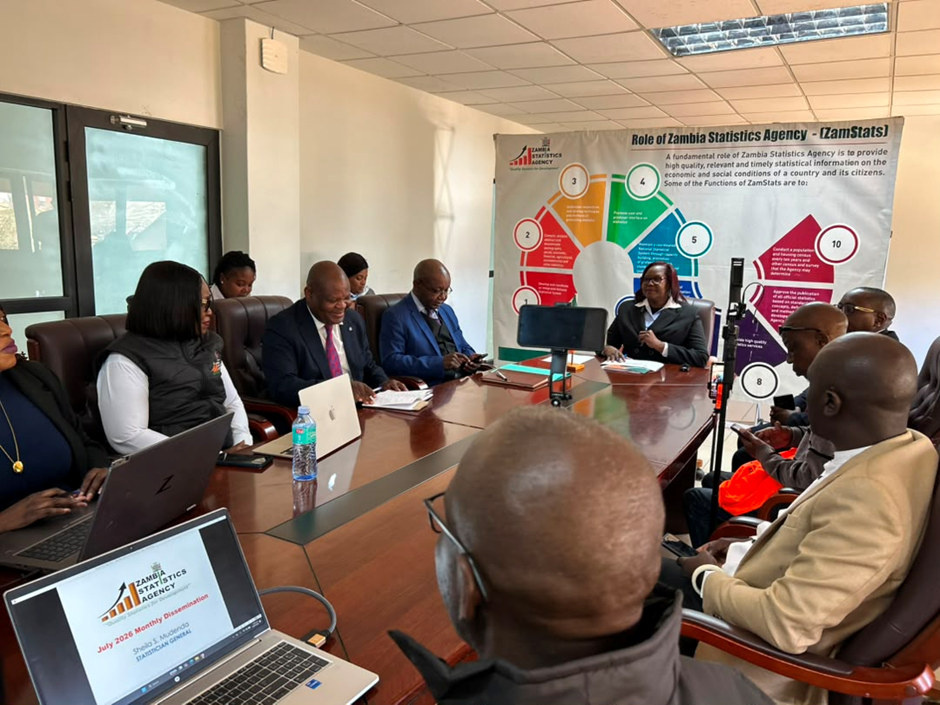
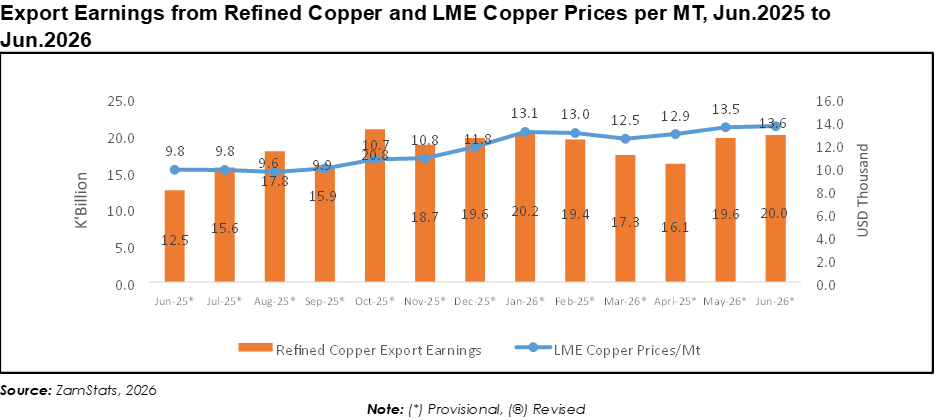
Samuel Sikazwe, Garden, Lusaka | 5 August 2026—Refined copper generated K20.4 billion in export earnings for Zambia in June 2026. This production volume averages K23 million in revenue for every hour of the month, continuously anchoring the national balance sheet.
One Metal Still Carries the Weight of a Nation's Trade Book
That single commodity accounted for 68.7% of everything Zambia sold to the world during the month, according to the Zambia Statistics Agency's trade performance figures for June 2026. No other export category came close. Refined copper earnings themselves grew by 7.2% on a monthly basis, pushing cumulative volumes for the first half of the year to 446.1 thousand metric tonnes. This output represents a figure 7.4% higher than the same period in 2025. This sustained volume output responds directly to global industrial demand. As international markets accelerate their transition toward electrification, electric vehicle manufacturing, and grid modernization, off-takers require a continuous supply of high-grade base metals. Zambia's mining sector meets this structural deficit, securing a predictable stream of foreign exchange reserves for the national economy.
The country recorded a trade surplus of K4.2 billion in June, down from K7.0 billion in May. Total cumulative trade for the first six months of 2026 reached K304.0 billion, a decline of 6.0% compared with the same period in 2025. Total imports rose by 10.2% to K25.4 billion between May and June. Total exports slipped by 1.6% to K29.6 billion over the same monthly window. This surplus, though narrower, provides the Bank of Zambia with the foreign exchange liquidity required to intervene in currency markets and manage exchange rate volatility. A positive trade balance ensures that the country can comfortably service its external debt obligations and maintain sufficient import cover for essential commodities like petroleum and pharmaceutical products.
Traditional Exports Hold the Line as Other Categories Shift
Traditional exports, the category refined copper belongs to, remained the dominant force in Zambia's trade performance. Export earnings from raw materials fell by 10.4% in June, and capital goods exports dropped even further, down 17.3% over the same month. This drop by 17.3% in June 2026 in capital goods exports indicates a recalibration in cross-border equipment transfers, keeping heavy machinery within the domestic market to service local industrial needs . Against that backdrop, refined copper's monthly growth of 7.2% stands out, moving in the opposite direction to two entire export categories at once.
Non-traditional exports, the products Zambia has spent years building up as an alternative to copper, moved lower overall, falling by 6.3% to K9.3 billion in June. Within that category, agricultural non-traditional exports actually grew by 13.0%, led by tobacco, which accounted for 14.1% of that segment's value, and corn seed, at 10.9%. This agricultural growth holds immense strategic value. Tobacco offers a high-yield cash crop that injects capital directly into rural farming districts. Simultaneously, the steady export of corn seed positions Zambia as a vital agricultural hub for the broader region, supplying essential planting stock to neighbouring Southern African Development Community (SADC) nations navigating seasonal climate volatility. Non-agricultural non-traditional exports fell by 10.0%, dominated by nickel ores at 13.8% and sulphur at 9.5%.
On the import side, the country's spending patterns shifted noticeably. The import bill for consumer goods surged by 57.1% in June. Raw material imports rose by 19.5% over the same period. Intermediate goods remained the largest single import category, making up 39.2% of the total import bill for the month. The sharp rise in consumer goods points to robust domestic retail demand. Zambian distributors and retail networks are drawing directly on foreign exchange reserves to stock domestic shelves, reflecting confident consumer spending patterns within urban commercial centres. Furthermore, the rise in raw material imports signals an uptick in domestic manufacturing activity, with local factories importing unrefined inputs to process into finished goods.
A Metal with a Long Memory and a Growing Ledger
Refined copper's dominance is not a new story for Zambia. The metal has anchored the country's export economy for decades, long before the current bulletin's figures were compiled. What June 2026 confirms is that the reliance has not eased, even as government policy has pushed for diversification through agriculture, manufacturing, and non-traditional exports. Traditional exports, almost entirely refined copper, earned K20.4 billion in a single month, more than double the combined value of every non-traditional export category tracked in the bulletin.
Cumulative volumes climbing by 7.4% year on year suggest the mining and refining sector is expanding its operational footprint. Recent capital expenditure aimed at deepening existing mine shafts and upgrading processing technology is now translating into tangible output gains. This physical expansion ensures that Zambian copper assets remain highly competitive on the global commodity market.
Ms. Mudenda framed the Agency's role strictly as one of operational transparency regarding the figures.
"This Monthly publication is an attempt to provide highlights of the work of the Agency," she noted, "and how it can help media institutions and the general public to improve understanding and uptake of statistical information for decision-making and sustainable national development."
Publishing these underlying trends allows commercial actors to calibrate their investment strategies based on verified trade flows.
What the Ledger Suggests for the Months Ahead
The gap between May's K7.0 billion surplus and June's K4.2 billion figure presents a critical metric for corporate analysts tracking the Zambian market. A rising import bill, driven largely by consumer goods and raw materials, is closing the space that copper's export earnings have traditionally kept open. Whether that gap widens or narrows through the second half of 2026 will depend on two metrics moving in tandem. The market requires continued strength in refined copper output paired with a recovery in the non-traditional export categories that slipped in June.
Nearly seven of every ten-kwacha Zambia earned from exports in June came from one metal, refined, weighed, and shipped from the Copperbelt. Moving K20.4 billion worth of physical copper to international buyers requires an extensive logistics network, stimulating the domestic road freight sector and creating secondary economic value before the metal even crosses the border. That single monthly figure showcases the unmatched commercial power of the Zambian mining sector. This resource continuously guarantees the country's position as a primary supplier to the global industrial economy, establishing a resilient foundation for future national growth.